

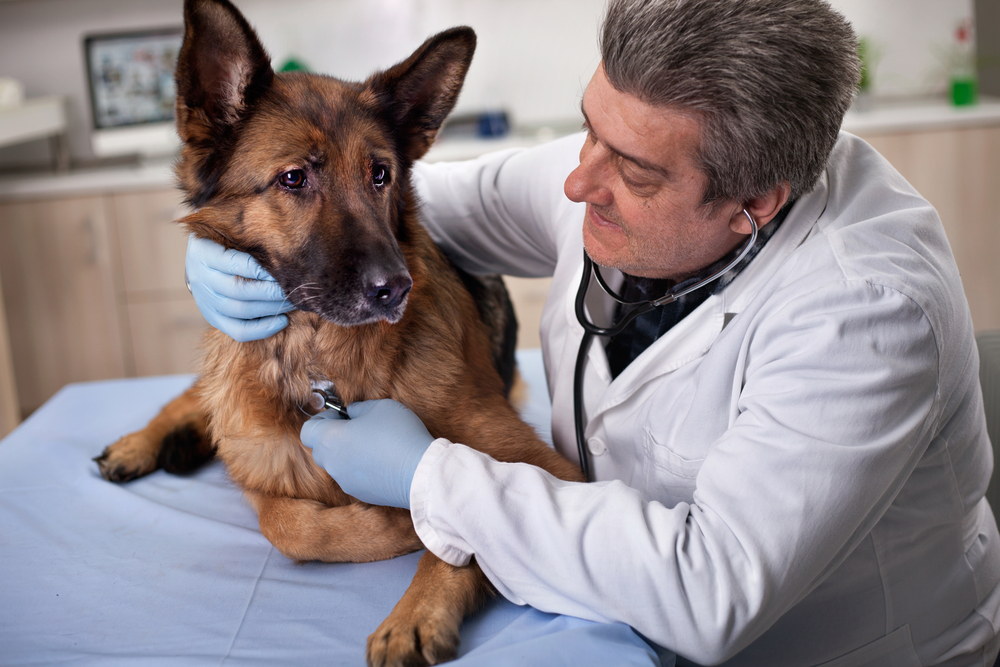
What you pay for an emergency visit depends on what is wrong, how fast treatment has to start, and how big your pet is. The cost driver that rarely gets counted is where the care happens. A dedicated emergency hospital staffs a full team, an ICU, and a surgical suite overnight and on weekends, and that overhead is built into every invoice it writes. A swallowed sock, a deep laceration, or a dog who cannot stop vomiting all need to be seen the same day, and a family veterinary practice that is already open usually charges less than an ER for the identical work. The clock does not move either way: you are deciding where to go, not whether to wait.
We handle urgent and emergency cases ourselves at Alpine Animal Hospital in Pocatello, which means most families never need a second facility or the fees that come with one. Digital x-ray, ultrasound, in-house lab work, a surgical suite, and overnight hospitalization are all under this roof, so a cat who cannot urinate or a dog with something stuck in the gut gets diagnosed and treated in one place. We are open until 8 p.m. on weeknights, and our phones are answered day and night so we can see most emergencies after hours too. When an unexpected emergency bill arises, our payment plans help spread the cost over time. If something looks wrong at home, call us first so we can tell you how fast your pet needs to be seen.
What an Emergency Bill Is Made Of
- Emergency bills track three things: how sick your pet is, how fast treatment has to start, and what they weigh, since drugs and fluids are dosed by the pound.
- A hospital that keeps overnight staffing, an ICU, and a surgical team on standby builds that readiness into every invoice, so identical care often costs less at a family practice that’s already open.
- Financing, national grant programs, insurance bought before symptoms start, and a small monthly savings habit are the four levers that turn a shocking total into a manageable one.
- Trouble breathing, pale gums, a male cat straining in the litter box, unproductive retching, or a collapse are all reasons to call us tonight rather than wait for morning, and the earlier visit is nearly always the smaller bill.
Why Is an Emergency Visit More Expensive Than a Regular Appointment?
You’re paying for readiness. Few practices can justify keeping shelves stocked with the medications needed for critical emergencies, a surgical suite always at the ready, and middle of the night staffing with the expertise to handle major trauma or illness. A building that keeps them stocked along with overnight staff and an ICU spreads that cost across every invoice it writes.
A true veterinary emergency facility often has specialist-level veterinarians and equipment like ventilators, a blood bank for transfusions, and imaging equipment like a CT or MRI. The equipment and medications in the veterinary world are the same grade you’d find in a human ER. The difference is that no health insurer is quietly absorbing most of the bill, so the number on the estimate is the whole number, not a copay.
Where care happens changes that math more than most families expect. A large majority of patients who need emergency care don’t necessarily need a specialist, advanced imaging, or an ICU. Because we handle advanced surgery here, a dog who swallowed a corn cob on a Tuesday evening gets worked up, anesthetized, and recovered under one roof, without an after-hours facility’s overhead layered on top. A few cases still need something a referral hospital has, like a critical care unit staffed around the clock, and we’ll tell you that early, since a transfer changes both the plan and the estimate.
Why Do Two Pets With the Same Diagnosis Get Different Bills?
The biggest factors that change the bill for two pets with the same problem are size, severity, breed, age, and temperament.
- Weight: Sedation, anesthesia, pain medication, antibiotics, and IV fluids are dosed by the pound, so a big dog consumes several times what a small cat does.
- Severity: A stable patient seen earlier needs far less care and medication than one arriving in shock. A dog who swallows a sock and is seen right away might be able to have vomiting induced and sent home; one seen three days later needs major abdominal surgery and days of hospitalization.
- Breed: A flat-faced dog or cat needs closer airway monitoring around anesthesia, before, during, and after, which adds staff time to a procedure another patient recovers from uneventfully. Some pets need rare blood types for transfusion, or can’t have specific medications. Toy breeds might need extra temperature support, and giant breeds need extra staff just to carry them.
- Age: Puppies and kittens carry almost no reserve, so a bout of vomiting an adult shrugs off can mean overnight fluids and glucose support in a 10-week-old. Seniors may need different medications and extra monitoring, especially if they have underlying conditions like heart, liver, or kidney disease.
- Temperament: A pet who calmly allows a blood draw can be assessed quickly. One who panics may need sedatives and extra staffing just to be handled.
What Do the Most Common Pet Emergencies Cost?
Most pet emergencies land between a few hundred dollars for an exam with outpatient treatment and several thousand once surgery or a hospital stay is involved. Every case gets priced by what it needs, and veterinary care costs climb fastest in the emergency setting, where the exam fee is only the entry point and diagnostics, hospitalization, and treatment account for most of the estimate.
When a Dog or Puppy Swallows Something They Shouldn’t
Gastrointestinal foreign body obstruction happens when a swallowed object, like a sock, toy, or corn cob, lodges in the intestine. The trapped tissue starts losing blood supply within hours. Care begins with IV fluids and pain control, then imaging to locate the object and judge whether it can pass. If caught within a few hours, we can sometimes induce vomiting to remove the object. Something still sitting in the stomach can sometimes be retrieved with endoscopy, which we do here and which costs less than opening the abdomen. Once an object moves into the intestine, it becomes abdominal surgery, occasionally with a damaged section of bowel removed, followed by several days of hospitalization.
String, tinsel, and ribbon deserve their own warning, and kittens love all three. A linear foreign body anchors at one end and saws through the intestinal wall, which can mean multiple incisions and a longer recovery.
General range: roughly $1,200 to $2,500 when the object comes out early or endoscopically, and $2,500 to $6,000 or more once surgery, bowel resection, and a multi-day stay are involved.
When a Male Cat Can’t Urinate
Urethral obstruction turns fatal within 24 to 48 hours in a male cat, because the kidneys keep making urine with nowhere to send it and potassium rises until the heart cannot hold a normal rhythm. Treatment means sedation, a urinary catheter to relieve the blockage, IV fluids to flush the kidneys, and repeat bloodwork tracking potassium and kidney values. Most blocked cats stay a couple of days while the bladder recovers.
A cat who arrives early and stable costs far less than one who arrives flat with a dangerous heart rhythm. Cats who block repeatedly may need a perineal urethrostomy, a surgery that permanently widens the opening, which adds meaningfully to the total.
Typical spread: about $1,000 to $3,000 for an unblocking and hospital stay, higher when cardiac support or surgery enters the picture.
When a Pet Is Hit by a Car
A dog who walks away from a car can look deceptively fine, so X-rays of the chest and abdomen come early, catching bruised lungs, hernias, free air, and pelvic fractures no hands-on exam will find. Ultrasound shows free fluid from a bleeding spleen or a ruptured bladder. Head trauma can be subtle at first, so pupils, gum color, and alertness get rechecked over hours rather than assessed once.
Some pets need oxygen, pain control, and a night of observation, then go home fine. Others need a splint, a chest tap, or surgery to repair a torn diaphragm or a bleeding organ.
Expect near $300 to $800 for exam, imaging, and observation when injuries stay minor, climbing to $3,000 to $8,000 or beyond once surgery and intensive care are involved. Checking your pet right away can mean catching a small bleed on a spleen and performing surgery before they are in shock; waiting can mean emergency surgery and blood transfusions with days of hospitalization.
Does Waiting Overnight to See If Your Pet Improves Save Money?
Usually the opposite. Watching and hoping a problem passes is the most natural instinct in the world, but emergencies price themselves by how far they’ve progressed, so the same condition treated early in its course often costs a fraction of what it does after a night or two of waiting. Being seen early is the best cost control there is.
The pattern holds across almost everything we treat. Vomiting seen on day one is often an exam, fluids, and anti-nausea medication your dog goes home with the same afternoon, while the same dog on day three may be dehydrated, with electrolyte changes that need IV correction and a hospital stay. A laceration closed while it’s fresh is a straightforward repair, and the same wound a day later is often infected, too swollen to close, and managed open for weeks. The sock, the blocked cat, and the small spleen bleed all follow the same curve: the price of the problem grows with every hour it’s left to work.
That’s why the choice we hope Pocatello families make is the early one. Come in for same-day urgent care while the problem is still small, and if it’s after hours, call Alpine anyway, since our phones are answered day and night and we see most emergencies outside regular hours. If you’re not sure whether what you’re seeing is an emergency at all, that’s exactly what the phone is for. Our team is always happy to talk through your pet’s symptoms, tell you what to watch for, and help you decide between coming in tonight and first thing tomorrow. That conversation costs nothing, and it regularly saves families the difference between a manageable bill and a frightening one.
What Happens After You Walk Through the Door?
The first look happens before any paperwork. A technician assesses your pet right away to check breathing, heart rate, gum color, and temperature, so the sickest patient gets treated first rather than whoever arrived first. An exam and a written estimate follow, and past immediate stabilization, nothing proceeds until you’ve approved the plan.
The veterinarians and technicians on duty will show you what they’re seeing and go over an estimate with the plan for diagnostic testing first. Once tests are back and the team knows what they’re dealing with, a second estimate for treatments will be presented and all your questions will be answered.
| Stage of the visit | What’s happening |
| Arrival exam and initial estimate | Triage: vitals, gum color, breathing and pulse checked on arrival; then a head-to-tail exam, diagnosis discussion, and written estimate for diagnostics. |
| Diagnostics and treatment estimate | Bloodwork, urinalysis, x-ray, and ultrasound determine the severity of your pet’s condition and help establish a plan, with an estimate for needed treatments. |
| Treatment and monitoring | Fluids, medications, surgery, and hospitalization depending on your pet’s condition. |
| Discharge | Written instructions, take-home medications, recheck plan |
If cost is a concern, tell us. Ask which line items are optional, ask what changes if you decline one, and ask us to call before the total passes a number you set. Those are normal questions, and we’d rather answer them up front.
How Do You Pay for an Emergency You Didn’t See Coming?
Most households use a combination rather than one solution. Financing covers the bill the day it happens, a grant can fill a gap when the diagnosis qualifies, and insurance reimburses afterward if a policy was already in place. All of it works better when cost questions are raised with our team right away than after discharge.
Financing That Spreads the Bill Out
Different practices offer different options, though some don’t offer any. Choosing to obtain care at a practice that does, like Alpine Animal Hospital, means that cost doesn’t have to be the deciding factor in your pet getting care right away. Our own scheduled payment plans through Cherry break a total into set payments, with no hard credit checks and 0% APR options, so a frightening night doesn’t have to be settled in one transaction.
Grants and Assistance When Cost Is the Barrier
Financial assistance programs for veterinary care include national grants, breed-specific funds, and condition-specific relief, and applications move fastest when a diagnosis and a written estimate are already in hand. RedRover Relief, Bow Wow Buddies, Pet Assistance Inc., and Frankie’s Friends each fund emergency cases under their own rules around income, breed, or condition. Idaho also has regional rescue and breed groups that quietly help with vet bills, so ask us what’s active locally.
Some local resources to check out:
- Idaho Humane Society
- Audrey Pet Foundation
- Bannock Humane Society
- PAWS MedFund
- Pocatello Portneuf Animal Welfare Society
Why Insurance Only Helps If You Buy It Early
Pet insurance reimburses a percentage of covered costs after the deductible, and anything diagnosed first becomes a pre-existing condition for the life of the pet. That’s the whole argument for enrolling a puppy or kitten during the first year, while the record is clean and premiums sit low. Most companies pay you back after you’ve paid the hospital, so keep a card or a small cushion available to bridge the wait on a claim. Plans differ widely in what they exclude, so ask us how coverage and financing work together before you need either one.
Frequently Asked Questions About Emergency Vet Care Costs
What if I can’t pay the whole bill up front?
Tell us before treatment starts rather than after. We build the estimate around what’s medically necessary first, and knowing your ceiling lets us sequence care instead of guessing at it. Financing applications can be filled out in the lobby, and assistance programs move faster once a diagnosis and estimate exist on paper.
What if it’s the middle of the night and I’m not sure it’s an emergency?
Call us. Our phones are answered day and night, and describing what you’re seeing takes five minutes. We’ll tell you whether your pet needs to be seen now, can wait until morning, or can be watched at home, and exactly what changes should make you call back. Guessing alone at 2 a.m. is how small problems get time to become expensive ones.
Why does my estimate show two different numbers?
The low end assumes your pet responds the way most do, and the high end covers complications: an extra night, a second round of bloodwork, a longer surgery than expected. Nobody can predict on arrival which end a patient lands on, so the range is honesty rather than padding. You’ll get updates as things change, and we’ll check with you before crossing a limit you’ve set.
Where to Turn When Your Pet Needs Help Tonight
An emergency bill looks big because the work behind it is big: a team on hand, a diagnosis made in hours instead of days, and someone watching your pet’s numbers while you try to sleep. Alpine Animal Hospital provides veterinary care in Pocatello for the routine Tuesday and the frightening Saturday alike, and we always do our very best to keep costs affordable. If something seems wrong right now, reach out and we’ll tell you whether to come in tonight or first thing tomorrow.




Leave A Comment