

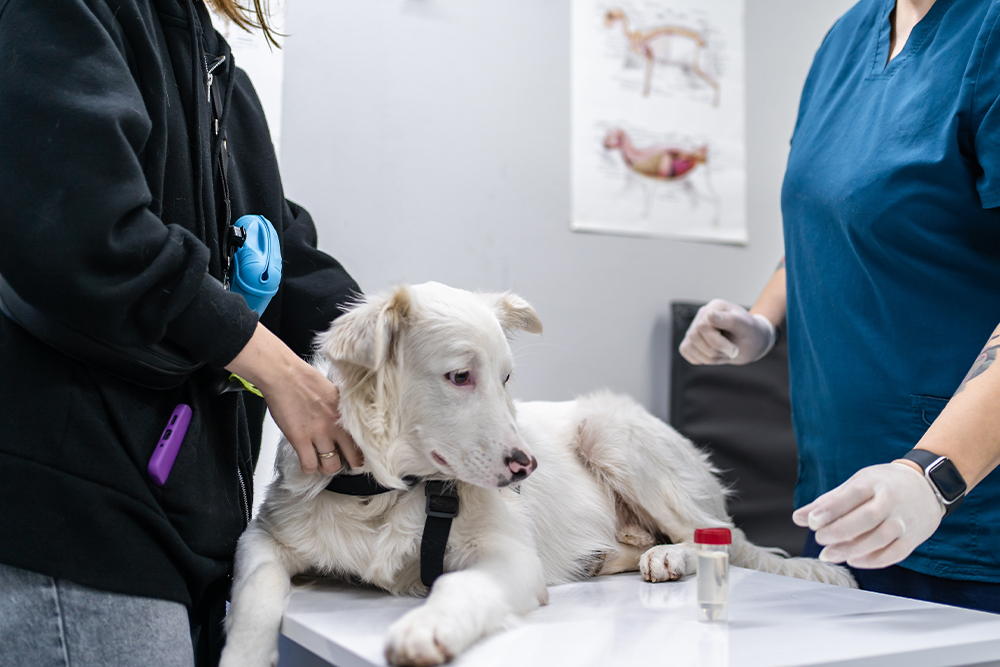
A useful senior screening covers more than a quick exam. It usually means a full physical, a complete blood count and chemistry panel, a thyroid check, a blood pressure check, a urinalysis, and X-rays of the chest and abdomen to assess the heart, lungs, and organs. Each test targets diseases that grow more common with age: kidney disease, diabetes, thyroid imbalance, hypertension, heart disease, and arthritis. Dogs are considered seniors around age seven, cats around age ten, and large-breed dogs even earlier. Catching these conditions before your pet feels sick is the difference between managing a disease and chasing it.
At Alpine Animal Hospital, senior workups for dogs and cats in Pocatello are personalized and thorough, with the goal of catching problems early when they are small and treatable. When something warrants a closer look, we keep ultrasound, X-ray, and endoscopy on site so everything stays under one roof instead of bouncing through a referral. If you have an older dog or cat at home, book a senior screening and we will pull together a plan built just for them.
Senior Screening at a Glance
- Senior screening looks for kidney disease, thyroid imbalance, high blood pressure, heart disease, diabetes, arthritis, and cancer while your pet still feels fine, which is exactly when these conditions are easiest to manage.
- Dogs usually enter their senior years around age seven and cats around age ten, and large-breed dogs even sooner, so screening starts earlier than most families expect.
- Bloodwork, a urine test, a blood pressure reading, and X-rays each catch a different set of problems, and together they paint a picture no single test can give.
- Tracking results over time flags trouble early, because a value drifting the wrong way tells us something long before it crosses into an abnormal range.
How Can You Stay Ahead of Age-Related Disease at Home and in the Clinic?
The best way to protect a senior pet is to get in front of trouble early, and that head start comes from two things working together: what we track in the clinic and what you notice at home.
Pets age faster than we do, and a year is a long time in a senior dog or cat’s body. That is why twice-yearly senior wellness visits become the standard once the gray muzzle sets in. Two touchpoints a year mean we catch a shift while there is still time to act.
The at-home part is simpler: nobody knows your pet’s normal like you do. If you notice slowing down, drinking more, or losing weight between visits, tell us; those observations point us toward what to check in the clinic.
The real power is in the trend. Catching disease before it announces itself is the whole point of preventive testing, which finds trouble months ahead of any outward sign. Without a baseline to compare against, an early problem looks like nothing at all. With one, the same numbers tell the start of a story we want to get ahead of.
What Does a Comprehensive Senior Screening Include?
A full senior screen combines tests that each look at a different system: bloodwork for the organs and blood cells, a urine test for the kidneys and bladder, a blood pressure reading for the heart and vessels, and X-rays for the chest and abdomen. Which pieces we run, and how often, depends on your pet.
Twice-yearly visits with baseline bloodwork and targeted imaging are the backbone of senior pet care recommendations, and the exact panel is tailored to your pet’s age, breed, and history. A young senior with a clean record might get a streamlined panel, while a twelve-year-old cat losing weight gets a deeper look. We keep in-house diagnostics on site, so most of the workup happens during the same visit.
Is a Standard Wellness Exam Really Not Enough for an Older Pet?
A standard exam tells us a lot, but it cannot see inside the kidneys, read a blood sugar level, or measure the pressure in your pet’s arteries. Older dogs and cats hide illness well, and a great deal can change between annual visits. Pairing a hands-on exam with targeted lab and imaging is what turns a good checkup into an early-warning system.
An exam catches what can be seen, heard, and felt: a heart murmur, a new lump, tartar and inflamed gums, sore joints, a drop in weight. What it cannot catch is a kidney already running at a fraction of its capacity, a blood sugar creeping upward, or a blood pressure quietly straining the vessels. Those need a test. That is why lab work sits alongside the exam rather than replacing it, and why the two together see so much more than either does alone.
What Can a Blood Panel Tell You About Your Aging Dog or Cat?
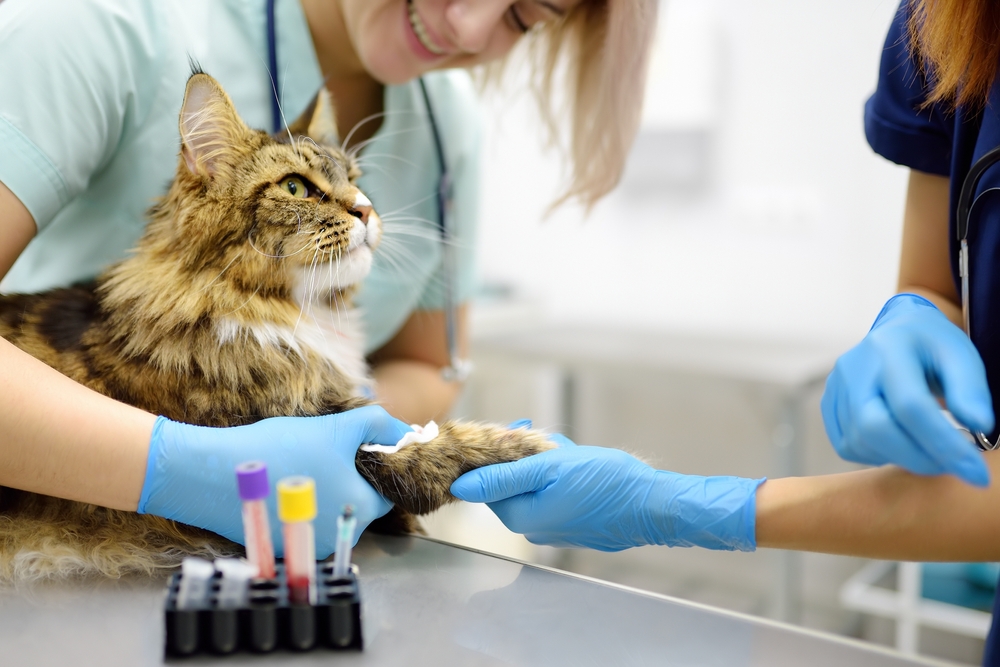
Blood work is an internal snapshot taken before symptoms show up. It measures organ function, blood cells, and hormones, and can flag kidney disease, diabetes, thyroid problems, anemia, infection, and more, often while your pet still looks completely healthy. It is the single most information-dense test in the whole senior screen.
A senior panel usually pulls together a few different tests, and here is what each one watches for:
- Complete blood count (CBC): counts red cells, white cells, and platelets to spot anemia, infection, inflammation, and some clotting problems.
- Chemistry panel: reads kidney and liver values, blood sugar, protein, and electrolytes, the core markers for kidney disease, liver disease, and diabetes.
- Thyroid testing: measures hormone levels to catch an underactive thyroid in dogs or an overactive one in cats.
- Heartworm and tick-borne disease testing: screens for hidden infections that can quietly damage organs over time.
We run bloodwork for dogs and cats in our own lab or send it to a partner lab when deeper insights are needed; either way, results are back within a day or two. The single most valuable thing about senior lab work, though, is comparison. A number read against your pet’s own prior results tells us far more than one compared with a textbook range.
Why Check an Older Pet’s Blood Pressure?
High blood pressure, or hypertension, is dangerous in pets for the same reason it is in people: it works quietly and damages organs long before anything looks wrong. In dogs and cats it is often tied to another condition, most commonly kidney disease, an overactive thyroid, or diabetes, which is why a pressure reading belongs alongside the bloodwork.
Hypertension strains the kidneys, heart, and brain for months before a single symptom shows up, and by the time a family notices, the damage has often touched several organs. One of the first outward clues can be sudden blindness from retinal detachment, which is why we check pressure well ahead of that point.
Measuring it is gentle. A small cuff goes around a paw or the base of the tail, much like a blood pressure check at your own doctor’s office, and we take several readings while your pet settles to get an honest number. When pressure runs high, it is usually managed with a daily medication, along with treating whatever underlying condition is driving it. Catch it early and we protect the kidneys, eyes, heart, and brain from damage that does not undo itself.
Why Does My Pet Still Need a Urine Test After Blood Work?
A urine test, or urinalysis, reads things blood work cannot. It shows how well the kidneys are concentrating urine, whether there is a hidden infection, whether sugar is spilling over from diabetes, and whether the bladder is inflamed or forming crystals. Paired with bloodwork, it turns a partial picture into a complete one.
Here is the part that surprises many families about a urinalysis: dilute urine in a single sample can reveal early kidney disease even when the kidney values on the blood panel still look normal. The urine catches it first. That is why we run the two together, because each test covers the other’s blind spots.
Spotting a Quiet Heart Problem Before Symptoms Appear
Heart disease often builds silently, and many dogs and cats show no outward sign until the heart is already struggling. Screening picks up trouble early through a handful of noninvasive tests: chest X-rays, a heart ultrasound, a blood test called NT-proBNP, and sometimes an ECG. None of them hurt, and most pets tolerate them easily.
Here is how the main cardiac screening tools compare:
| Test | What it looks at | What it feels like for your pet |
|---|---|---|
| Chest X-ray | Heart size and shape, fluid in the lungs | A quick, still moment on the table |
| Heart ultrasound (echocardiogram) | Chambers, valves, and pumping in motion | Lying on one side while a probe glides over the chest |
| NT-proBNP blood test | A marker that rises when heart muscle is stressed | A simple blood draw |
| ECG | The heart’s electrical rhythm | Small clips on the skin, no needles |
Measuring NT-proBNP each year turns a single blood draw into an early alarm, flagging strained heart muscle before a murmur or cough appears. When a screening test points toward the heart, we layer these tools together, usually starting with a chest X-ray, so we can pin down what is happening before choosing a treatment.
Where X-Rays and Ultrasound Fit Into a Senior Workup
Imaging comes into play when we need to see structure, not just chemistry. X-rays and ultrasound each show something different: X-rays map outlines and density of bones and organs, while ultrasound looks inside soft tissue in real time. On a senior screen, chest and abdominal X-rays are a common baseline, and ultrasound follows when we need a closer look.
Radiography is often the first look when we suspect an enlarged heart, a mass, or joint changes, and our digital X-ray produces those images in seconds. Where an X-ray shows silhouettes, ultrasound peers into soft tissue in real time, revealing texture and structure within the liver, kidneys, and abdomen. Together they answer two different questions, and we have both on site so a concerning finding on the first can move straight to the second without a referral.
The Diseases These Tests Are Built to Uncover
Screening earns its keep by catching a specific set of age-related diseases early: thyroid imbalance, kidney and liver disease, heart disease, cancer, arthritis, and dental disease. Every one of them hides well in its opening stages, and every one is far easier to manage when we find it before your pet feels sick. If a finding raises a question, you can always ask us about your pet’s results and we will explain what we are seeing and what it means for your pet.
Thyroid, Kidney, and Liver Disease
Thyroid disease runs opposite ways in the two species. In dogs, hypothyroidism slows metabolism into weight gain, sluggishness, and a thinning coat that look a lot like ordinary aging, and once a blood test confirms it, a daily pill turns things around. In cats, hyperthyroidism pushes the body into overdrive, so a cat eats ravenously yet keeps shrinking; left alone it strains the heart and kidneys, so catching it early matters.
Two other common organ diseases hide just as well and show up on the same panels:
- Kidney: Chronic kidney disease is one of the most common conditions of old age, especially in cats. Because outward signs only appear after most function is already lost, routine screening is often the only thing that catches it early enough to change the course. Early clues are subtle: drinking and urinating more, a smaller appetite, some weight loss. Caught early, pets often do well for years on diet changes, fluids, and medications.
- Liver: Blood work often flags liver disease well before your pet looks sick, since rising liver enzymes show up on the chemistry panel ahead of symptoms like poor appetite, vomiting, or a yellow tint to the gums. Many liver problems respond well when we get to them early.
Heart Disease in Senior Pets
The most common heart problems split along species and size. Small dogs tend toward mitral valve disease, a leaky valve that shows up as a murmur. Large breeds are more prone to dilated cardiomyopathy, where the heart muscle weakens and stretches. Cats most often develop hypertrophic cardiomyopathy, a thickening of the heart wall. Coughing, tiring quickly, or faster breathing at rest are worth a call. Caught early, heart disease treatment can keep many pets comfortable and active for a long time.
Cancer Screening in Senior Pets
Routine exams and imaging are how we catch cancer early, when it is most treatable. Any lump that grows quickly, feels stuck to deeper tissue, or changes in color or texture deserves a same-day look, and a small sample of cells usually tells us what we are dealing with. Some cancers also favor particular breeds: lymphoma, which targets the immune system, often shows up first as swollen lymph nodes, while hemangiosarcoma and osteosarcoma turn up more in larger dogs like Golden Retrievers and German Shepherds.
Arthritis and Dental Disease
Arthritis affects both dogs and cats, though cats hide it well, so it often shows as reluctance to jump or a change in grooming rather than an obvious limp. A physical exam and X-rays confirm it, and management usually starts with weight control paired with joint supplements to support the cartilage. We also offer laser therapy and stem cell treatments on site to ease inflammation in stiff joints. Newer medications have changed the picture too. Cats now have a monthly injection called Solensia that quiets arthritis pain, and dogs have a similar monthly injection called Librela, giving many stiff older pets an easier life without a daily pill.
Dental disease is nearly universal in older pets, and it is not just about the mouth, because bacteria under the gumline can strain the heart, liver, and kidneys over time. Bad breath, drooling, dropping food, or pawing at the face are signs worth acting on. A professional dental cleaning with pre-anesthetic bloodwork is how we keep older pets safe under sedation. In between, dental care at home through brushing and vet-approved chews slows the buildup.
Senior Screening Questions Pet Families Ask Most
At what age should I start senior screening for my pet?
Most dogs count as seniors around age seven, and cats around age ten; large and giant breeds age faster and may need to start earlier. Begin baseline senior bloodwork and imaging as your pet enters this window, even while they seem perfectly healthy, because those early values are what make trend-tracking possible.
When in doubt, ask us at your pet’s next visit and we will tailor the timing to their breed and history.
My senior pet seems totally healthy. Do these tests really matter?
These tests matter most when your pet seems healthy, because that is when trouble is easiest to get ahead of. Dogs and cats are built to mask illness, and conditions like kidney disease and high blood pressure can advance quietly for a long time before any outward sign appears. Screening a healthy senior gives us a clean baseline and a real chance to catch a problem while it is still small and manageable, rather than after your pet has already started to feel unwell.
What happens if my pet’s senior screening turns something up?
Most senior screening findings are not emergencies, and that is rather the point, since we are looking on purpose while there is still time to plan. When something does turn up, we walk you through what the result means, whether it calls for action now or a scheduled recheck, and what your options look like from here. If your pet takes a turn in the meantime, we also provide urgent and emergency care during our open hours. Having a clear next step is what takes the worry out of an unexpected result.
More Good Years Start With an Early Look
The whole point of senior screening is simple: find the problem while it is still small, while you and your pet have the most options. A clear baseline and a couple of well-chosen tests each year catch kidney disease, thyroid imbalance, hypertension, heart disease, and arthritis long before they steal your pet’s comfort, and that head start is often what turns a scary diagnosis into a manageable one.
If there is an older dog or cat at home, now is the time to schedule your senior pet’s screening and get that starting picture on file. Have questions first? Reach out to our Pocatello team and we will help you figure out exactly what your pet needs.




Leave A Comment