


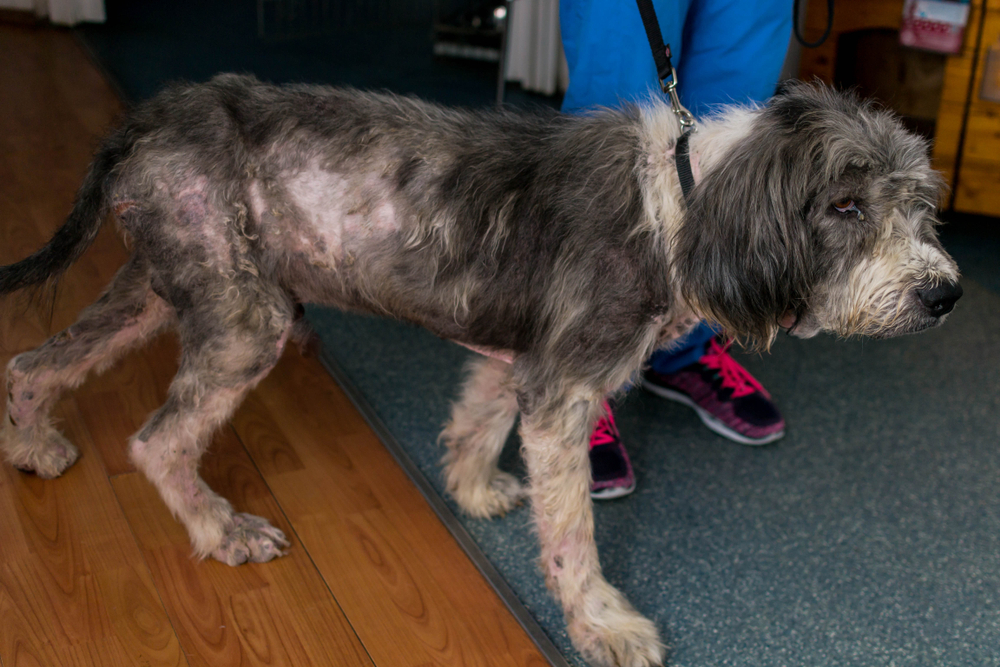
Hair loss in dogs and cats has a long list of possible causes, including hormonal imbalances, skin infections, parasites, allergies, and immune-mediated conditions, and pinpointing the right one requires more than looking at the bald spot. Alopecia, the clinical term for hair loss, is a symptom rather than a diagnosis: where the patch appears, what the skin beneath looks like, and whether it is spreading are all meaningful clues, but they rarely tell the full story without lab work.
The most useful early read is the pattern itself. Endocrine conditions such as hypothyroidism in dogs, hyperthyroidism in cats, and Cushing’s disease tend to produce symmetrical thinning across the trunk and flanks, while dermatologic causes like ringworm, mange, or allergies often produce irregular patches with more obvious skin involvement. Most cases improve significantly once the underlying cause is found.
Alpine Animal Hospital in Pocatello offers the in-house diagnostics needed to work up hair loss properly, including bloodwork, urinalysis, cytology, digital radiography, and ultrasound, all available on-site. Our advanced services also include laser therapy, regenerative medicine, and acupuncture for cases that require a deeper look or additional support once a diagnosis is established. If your dog or cat is losing hair in a way that concerns you, reach out to us and we will get to the bottom of it.
At a Glance: Hair Loss in Dogs and Cats
- Alopecia is a symptom, not a diagnosis: the right treatment depends on finding the cause.
- Symmetrical thinning without itch: usually points toward a hormonal cause.
- Patchy loss with redness or scratching: usually points toward allergies, parasites, or infection.
- Most cases improve once identified: but persistent or worsening loss should be worked up promptly.
Is It Normal Shedding or Alopecia?
Dogs and cats shed. Some breeds shed more, some seasons bring heavier shedding, and almost every healthy pet leaves hair on the couch. Alopecia is different, because it is hair loss that creates visible thinning or bald patches that do not fit normal shedding patterns.
Signs that what you are seeing is not normal shedding:
- A distinct patch: clearly smaller or balder than the surrounding fur.
- Symmetrical thinning: along both sides of the trunk or flanks.
- Skin changes underneath: redness, scaling, crusting, or odor.
- Broken hair (barbering): hair that snaps off short rather than coming out at the root.
- No regrowth: patches that stay bare over weeks or months.
- Focused scratching: licking or biting aimed at specific areas.
Pattern matters as much as amount, and where the loss sits often hints at the cause before any test is run.
| Where and how the hair is lost | What it often points to |
| Symmetrical thinning on both flanks, no itch | A hormonal cause |
| Circular patches with scaling | Ringworm |
| Patches around the face and legs | Demodex mites |
| Lower back and tail base, very itchy | Flea allergy |
| A smooth belly strip in a cat | Overgrooming |
| One thickened, licked spot on a leg | A lick granuloma |
Can Allergies Cause Hair Loss?
Allergies are one of the most common drivers of hair loss in dogs and cats. The immune system overreacts to triggers, the pet itches and licks and scratches, and the secondary damage to skin and hair creates the bald patches. The hair loss is not really from the allergy directly; it is from what the pet is doing about it.
Common allergy triggers:
- Environmental allergens: pollen, grass, dust mites, and mold drive atopic dermatitis, the most common itch syndrome in dogs.
- Food proteins: can cause non-seasonal itch and GI signs, and food allergies are diagnosed through elimination diet trials, not blood or saliva tests.
- Flea saliva: triggers intense reactions in sensitized pets, where even one bite is enough, and flea allergy classically affects the lower back, tail base, and inner thighs.
Long-term allergy management often combines anti-itch medication, medicated shampoos and conditioners, omega-3 supplementation, and sometimes diet trials or formal allergy testing.
Which Parasites and Infections Cause Hair Loss?
Even indoor pets pick up parasites, and a few of them are too small to see without a microscope. The usual culprits:
- Demodex mites: live in hair follicles, and when the immune system fails to keep them in check they overgrow and cause patchy loss, often starting around the face and legs.
- Sarcoptic mange: causes intense itch and crusting, is transmissible to other pets and people, and should be ruled out in any itchy dog with a new bald patch.
- Fleas: cause hair loss through bites and allergic reaction, and year-round parasite prevention is the easiest way to take them off the list entirely.
- Bacterial and yeast infections: often develop secondary to a primary problem but can produce significant loss once the skin barrier is compromised.
- Ringworm: a fungal infection that classically produces circular bald patches with scaling, contagious to other pets and people.
A skin scrape, tape prep, or fungal culture often answers the question quickly at the appointment.
What Hormonal Problems Cause Hair Loss?
When hair thins symmetrically along both sides of the body and the pet is not particularly itchy, hormones are the usual suspect. These changes tend to come on so gradually that owners do not notice until significant thinning is established.
Thyroid and Adrenal Conditions
Hypothyroidism is the most common endocrine cause of hair loss in dogs. The coat dulls and thins, often symmetrically along the trunk and tail, and the dog typically gains weight and slows down. A simple blood test confirms it, and a daily oral thyroid medication usually restores the coat over months.
Cushing’s disease produces a different picture: a thinning, fragile coat alongside a pot-bellied appearance, increased thirst and urination, and a bigger appetite. Cats can develop hyperthyroidism, which brings an unkempt, patchy coat alongside weight loss and behavioral changes.
Sex Hormones and Topical Exposure
Intact male dogs with testicular tumors can develop symmetrical hair loss from excess estrogen, and intact females sometimes show similar changes from hormone fluctuations, with neutering or spaying often resolving these cases.
Worth knowing: pets can absorb hormones from human topical medications, so owners using hormone replacement creams can transfer them through skin contact, licking, or shared sleeping spots. If a pet has unexplained hormonal-pattern hair loss and someone in the home uses topical hormone medication, mention it at the appointment.
Why Does Routine Blood Work Matter?
Many hormone imbalances often show up on blood work before they become visually obvious. Annual or semi-annual wellness bloodwork gives us baseline values that make catching a shift much easier, since a thyroid value that has drifted over two years tells us more than a single number ever could.
Which Breeds Have Inherited Coat Conditions?
Some dogs inherit coat conditions that are not curable but can be managed comfortably:
- Color dilution alopecia: affects dogs with diluted coat colors such as blue or fawn, where hair shafts break in the diluted areas and do not regrow.
- Seasonal flank alopecia: causes symmetrical bald patches on the flanks that wax and wane with the seasons.
- Sebaceous adenitis: an immune-mediated destruction of skin oil glands, more common in Standard Poodles, Akitas, and Vizslas, with scaling and patchy loss along the back.
- Zinc-responsive dermatosis: affects Northern breeds like Siberian Huskies and Alaskan Malamutes, with crusting and hair loss around the face that responds to zinc supplementation.
Diagnosis requires ruling out other causes first, and management usually centers on supportive skin care, nutritional adjustments, and sometimes light therapy.
Can Stress or Pain Cause Hair Loss?
Pets, especially cats, can express emotional or physical distress through repetitive grooming, and the result looks like alopecia even though the underlying problem is behavioral or pain-related.
Psychogenic alopecia in cats produces smooth, thin patches, often on the belly, inner thighs, or front legs, where the cat licks compulsively. The skin underneath usually looks normal, which is part of what distinguishes it from medical causes, and common triggers fit the broader category of life stressors: a new pet, a move, household changes, or boredom. Dogs do something similar with lick granulomas, persistent licking of one spot, usually a leg, that creates a thickened, hairless area.
Pain is the other half of this picture, and it is underdiagnosed. Cats with feline idiopathic cystitis lick the belly because of bladder discomfort, and dogs and cats with osteoarthritis lick painful joints. Pain-driven and stress-driven grooming look identical from the outside, which is why a physical exam, and sometimes imaging, is part of working these up.
How Do Nutrition and Grooming Affect the Coat?
The skin and coat are among the first places to show nutritional shortfalls. Hair growth needs a steady supply of protein, fatty acids, zinc, and biotin, and a deficient or unbalanced diet shows up in the coat first. Omega fatty acids from fish oil are one of the most consistently helpful supplements for dull or thinning coats.
Regular grooming with appropriate brushing improves circulation, removes loose hair, and distributes natural oils, while overbathing or harsh shampoos do the opposite. If you are bathing more than every two to four weeks with regular shampoo, you may be making coat problems worse.
What Does a Hair Loss Workup Involve?
The workup starts with a detailed history, covering when it started, where it appeared, what has been tried, and what other changes you have noticed, plus a physical exam that maps the pattern of loss. From there, in-house tests usually run during the same visit:
- Skin scraping: for mites such as demodex and sarcoptes.
- Tape prep cytology: for bacterial and yeast overgrowth.
- Fungal culture: when ringworm is on the differential, with results in days to weeks.
- Blood work and endocrine panels: when symmetrical, non-itchy loss points to hormonal causes.
- Allergy workup: through elimination diets, blood testing, or formal intradermal testing for environmental allergies.
Same-day results from in-house diagnostics mean treatment can usually start at the same visit rather than waiting on outside labs.
How Is Hair Loss Treated?
Because many different conditions cause alopecia, treatment depends entirely on diagnosis. Some general patterns:
- Allergies: anti-itch medication, medicated shampoos, omega-3 supplementation, year-round flea prevention, and sometimes diet trials or hyposensitization injections.
- Parasites: the appropriate antiparasitic, with environmental decontamination for contagious cases.
- Skin infections: topical or oral antibacterials and antifungals depending on severity, with culture when treatment is not working.
- Hormonal conditions: hormone replacement for thyroid disease or hormone-suppressing medication for Cushing’s.
- Stress-related grooming: environmental enrichment, sometimes medication, and ruling out underlying pain.
- Nutritional gaps: diet adjustment and targeted supplementation.
Follow-up rechecks are part of the plan, since they confirm regrowth, fine-tune medications, and catch the secondary infections that often pop up partway through treatment.
Frequently Asked Questions About Hair Loss in Pets
How Long Does It Take for Hair to Grow Back After Treatment?
It depends on the underlying cause and the pet’s coat type. Most pets show visible regrowth in 6 to 12 weeks once the trigger is treated, with full coat recovery taking 3 to 6 months. Hormonal causes typically take longer than allergic or parasitic ones, and some breed-related conditions stabilize rather than fully reverse.
Could My Pet’s Hair Loss Be Contagious to Me or Other Pets?
For some causes, yes. Ringworm, sarcoptic mange, and external parasites all transmit between pets and sometimes to people, while allergic, hormonal, and behavioral causes are not contagious. A skin scrape and possibly a fungal culture at the appointment sorts out which category your pet falls into.
Should I Bathe My Pet More Often if They Are Losing Hair?
Not without guidance. Some causes benefit from frequent medicated baths while others get worse with bathing, and routine bathing with the wrong product can strip protective oils. Wait for a diagnosis before changing the bath routine, and use the products your veterinarian recommends.
Restoring Your Pet’s Coat Health
Most hair loss has a clear cause and a clear path back to a normal coat. Whether your pet is scratching nonstop, quietly overgrooming in the corner, or showing symmetrical thinning you almost missed, there is a workup that can sort it out and a treatment plan that can fix it. The piece that matters most is starting before secondary skin damage compounds the problem.
If your dog or cat has new or worsening hair loss, schedule an appointment or get in touch to talk through what you are seeing.


Leave A Comment