

Professional dental cleanings are essential, but what you do at home between those visits matters just as much. Plaque starts forming on your pet’s teeth within hours of a cleaning, and without regular home care, it hardens into tartar that no brush can remove. The good news is that dental home care does not have to be complicated. With the right tools and a little consistency, you can significantly slow the buildup that leads to gum disease, tooth loss, and the systemic health problems that follow.
At Alpine Animal Hospital, our dental care services include professional cleanings, extractions, and dental assessments, but we also spend time helping owners build realistic home care routines that fit their pet and their schedule. Whether your dog barely tolerates a toothbrush or your cat turns everything into a wrestling match, we can help you find an approach that works. Schedule an appointment or contact us to discuss your pet’s dental health or get a hands-on brushing demonstration.
The Case for Home Dental Care
Periodontal disease begins with plaque: a soft bacterial film that forms continuously on tooth surfaces. Left undisturbed, plaque mineralizes into tartar within days. Tartar causes gum inflammation, deepening pockets of infection below the gumline, and progressive bone loss that eventually costs teeth their foundation. Without intervention, bacteria from that ongoing infection can travel to the kidneys, liver, and heart and cause organ damage over years.
Home dental care is the best tool available for slowing this progression between professional dental cleanings. Think of it as protecting the investment of each cleaning: the longer you can keep plaque from mineralizing, the less tartar accumulates, and the more your pet benefits from the cleaning they had. Our veterinary dental care and home care work as partners, not substitutes for each other.
The VOHC Seal: Your Shortcut Through the Noise
The dental product market is saturated with claims that are not always backed by evidence. The VOHC (Veterinary Oral Health Council) grants an independent seal of acceptance only to products that demonstrate measurable plaque or tartar reduction in clinical trials. It applies to chews, diets, gels, water additives, and other oral care products for both dogs and cats.
When evaluating any dental product, look for the VOHC seal. It is the most reliable shortcut to evidence-based choices, especially in a category where marketing often outpaces science. Our team at Alpine Animal Hospital can point you toward VOHC-accepted products appropriate for your pet’s size, species, and current dental health.
Brushing: Still the Gold Standard
Why It Works Better Than Everything Else
Toothbrushing mechanically disrupts the bacterial biofilm before it has time to mineralize. No spray, additive, or chew matches it for effectiveness when done consistently. Daily brushing provides the highest level of protection. Every-other-day brushing still delivers meaningful benefits. The goal is a sustainable routine, not perfection.
How to Actually Get Your Pet to Accept It
The biggest reason home brushing routines fail is rushing the introduction. A pet who has a bad early experience with a toothbrush will resist every session that follows. A gradual approach changes that.
- Start with touch: spend a few days simply touching the muzzle and gently lifting lips, with a small reward after each session
- Progress to finger contact: run a clean finger along the outer tooth surfaces and gumline
- Introduce taste: put a small amount of enzymatic toothpaste on a fingertip and let them taste and lick it before any brushing begins
- Move to a tool: introduce the CET fingerbrush or a soft-bristled toothbrush starting at the front teeth only
- Build gradually: extend further back in the mouth over the following days or weeks, session by session
Cooperative care techniques that rely on positive reinforcement and consent throughout the process are far more effective than restraint. Keep sessions short enough to end before your pet becomes resistant.
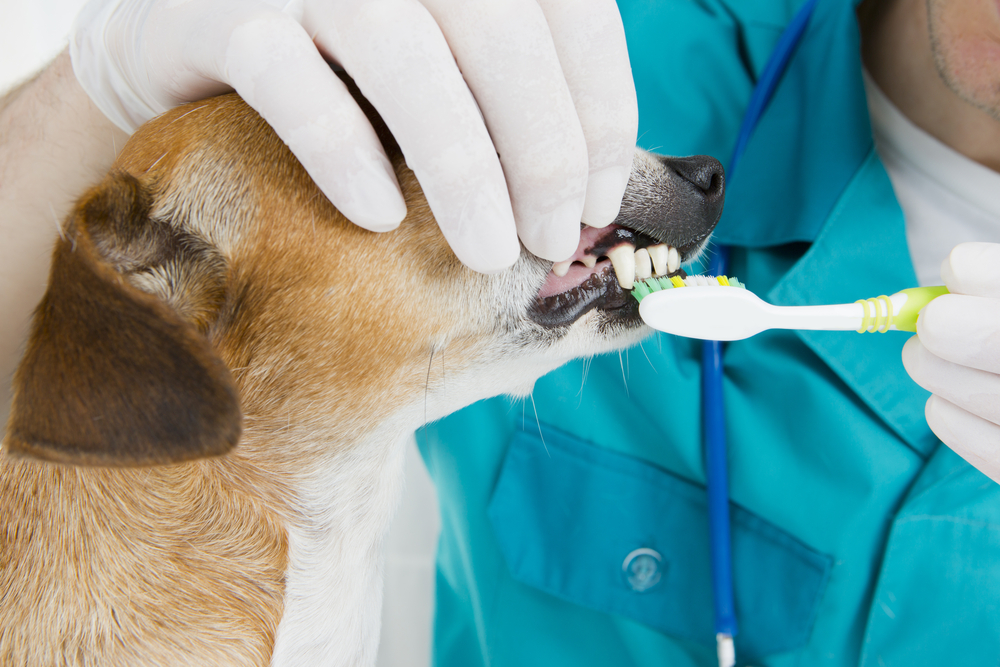
For brushing dog teeth, hold the brush at a 45-degree angle toward the gumline and use short circular or back-and-forth strokes. Focus on the upper back molars where tartar tends to accumulate fastest, but work your way there incrementally.
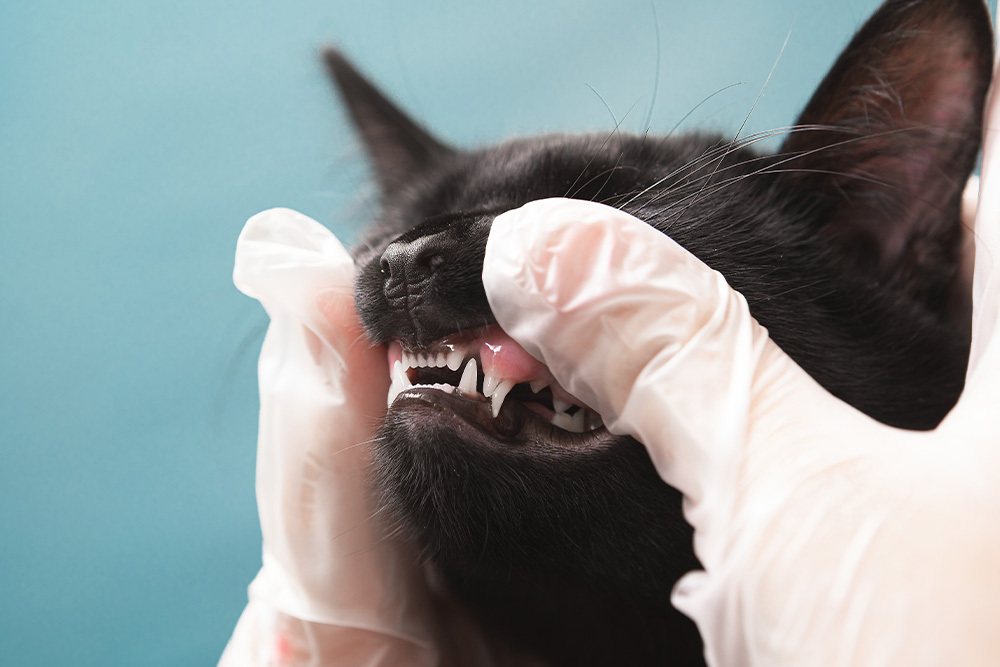
Brushing cat teeth works best with smaller brushes, very light pressure, and shorter sessions. Many cats tolerate brushing better when they feel stable on a surface rather than restrained in someone’s hands.
Always use pet-safe toothpaste. Human toothpaste contains fluoride and sometimes xylitol, both of which are toxic to pets. Our pharmacy carries CET enzymatic toothpaste and a full range of toothpastes and toothbrushes formulated for pets. Our team can demonstrate proper technique at your next visit, which makes the first few attempts at home much easier.
When Brushing Is Not an Option
Dental Wipes
For pets who genuinely will not tolerate a toothbrush, dental wipes provide friction-based plaque removal on accessible surfaces. They are more limited than brushing since they cannot reach deep gumlines or inner tooth surfaces, but consistent use provides meaningful benefit and is significantly better than no home care at all.
Vetradent Dental Wipes work for dogs and cats and are practical for front teeth, canines, and the outer surfaces of the cheek teeth. Pairing them with an enzymatic product adds chemical disruption of bacteria alongside the mechanical cleaning.
For some pets and households, wipes are not a stepping stone to brushing but a realistic long-term solution. Our team will help you assess whether that fits your individual pet.
Enzymatic Gels and Powders
Enzymatic products target the bacterial biofilm chemically, without requiring physical scrubbing. Products containing specific enzyme systems break down plaque at the molecular level even without brushing, though mechanical action always enhances effectiveness.
Perio Support Dental Care Powder can be added directly to food at each meal, providing passive enzymatic protection without any handling. It is one of the most practical options for resistant cats or for days when brushing simply is not going to happen.
Combining enzymatic products with wipes or brushing consistently produces better outcomes than any single approach alone. Browse our full selection of cat dental products and dog dental products for the complete range of options.
Water Additives
Water additives deliver antimicrobial or enzymatic ingredients passively with every sip, making them the most hands-off option available. Vetradent Water Additive goes directly into the water bowl and requires no cooperation from your pet.
Keep in mind: water additives cannot remove tartar that has already formed, and their effectiveness at preventing new buildup varies. Introduce them gradually at a diluted concentration to confirm your pet continues drinking normally before committing to full use. Check out our full dental rinse and water additive selection in our pharmacy.
Dental Diets
Dental diets are formulated so that teeth must penetrate the kibble before it crumbles, producing mild abrasive cleaning with every bite. Some formulations also contain ingredients that bind calcium in saliva to slow tartar mineralization. Like all home care tools, dental diets are most valuable as a complement to professional cleanings, not a replacement.
Our pharmacy carries dog dental diets and cat dental diets for pets whose oral health would benefit from this dietary approach.
Dental Chews: Choosing Safely
Chewing action physically scrapes plaque from tooth surfaces, and the right chew contributes genuine benefit. The safety rule that prevents most injuries: press your thumbnail firmly into the chew. If it does not leave a dent, the product is too hard and risks fracturing teeth. This eliminates antlers, hooves, hard nylon bones, and most raw bones from the safe list.
Dangerous chew items are common on pet store shelves despite the fracture risk. Safe chew toys flex or compress under hand pressure and allow teeth to make real cleaning contact.
Edible dental chews provide both mechanical plaque removal and enzymatic action in a single product. Our pharmacy carries a full range of dog dental chews and treats, as well as Greenies Dental Treats for Cats and ProDen DentalCare Bites for Cats, which are among the more cat-cooperative options available.
Always match chew size to your pet’s weight and supervise initial sessions with any new product. Monitor for gastrointestinal upset in pets with sensitive digestion.
What Home Care Cannot Do
Even the most diligent home routine cannot remove tartar that has already hardened onto teeth, and it cannot access the subgingival disease below the gumline where the most damaging infection lives. Professional dental cleaning under anesthesia is the only way to:
- Scale and polish both above and below the gumline
- Probe every tooth for pockets and root exposure
- Take full-mouth dental radiographs that reveal root and bone pathology invisible on surface exam
- Safely treat or extract teeth that cannot be saved
Anesthesia-free dental risks are real and worth understanding: procedures done without anesthesia address only visible surfaces, which is where the least significant disease lives. They improve the appearance of teeth while leaving the clinically important disease below the gumline untreated.
Home care earns longer intervals between professional cleanings. It does not make professional cleaning optional. Our small animal services include comprehensive dental care as a standard component of preventive health.
Building a Routine That Actually Happens
The most effective dental routine is the one that fits consistently into your real life. A few approaches that help:
- Anchor it to an existing habit: brushing right before bed or immediately after your pet eats means it happens without extra thought
- Start smaller than feels necessary: even 30 seconds of enzymatic gel on the gumlines is producing benefit
- Keep supplies visible: a dental kit in a basket near the pet’s feeding area is more likely to be used than supplies in a cabinet
- Involve the whole household: consistency holds even on irregular days when one approach is shared across everyone
Troubleshooting challenges is something our team genuinely enjoys helping with. If a technique is not working for your pet’s specific temperament, there is almost always an alternative approach or combination that does. Reach out between appointments rather than abandoning the effort.
Frequently Asked Questions About Home Dental Care
How do I know if my pet’s home care is actually working?
Fresher breath, less visible yellow-brown buildup at the gumline, and healthier-looking pink gum tissue between professional cleanings are all positive signs. At your pet’s dental evaluation, our team can compare the current tartar level to where it was previously and advise whether the current routine is adequate.
My cat hates having their mouth touched. Where do I even start?
Start with food rather than touch: put enzymatic toothpaste or dental powder on their food. Once they associate the taste with something positive, move to letting them lick it off a fingertip. Progress to the finger touching the outer lip surface. Small, rewarded steps over days or weeks build tolerance that trying to brush immediately never does.
How often does my pet actually need a professional cleaning?
Most dogs and cats benefit from annual professional cleanings. Many small breed dogs and senior cats benefit from more frequent care. The state of your pet’s mouth at their last dental evaluation is the best guide to how quickly tartar returns.
Is a dental diet enough on its own?
Dental diets add meaningful benefit and can be a useful part of a broader routine. For pets who cannot tolerate any other form of home care, they provide more than nothing. But brushing, enzymatic products, or chews alongside a dental diet always produce better outcomes than diet alone.
A Partnership Across Every Visit
At Alpine Animal Hospital, caring for your pet is not a job to us, it is a calling, and dental health is part of the complete picture we care about for every patient. The goal of home dental care is to work alongside professional cleanings in a way that keeps your pet comfortable and healthy between visits.
Schedule an appointment to get an assessment of where your pet’s dental health stands right now, get a product recommendation matched to their temperament, or have our team walk you through brushing technique. You can also contact us with questions before your next visit.


Leave A Comment